The Uganda AIDS Commission (UAC) has raised concern over the disproportionate burden of new HIV infections among adolescent girls and young women, warning that the trend threatens progress towards ending AIDS as a public health threat by 2030.
Tom Etii, the Acting Director General of UAC, said young women are recording infection rates almost four times higher than those of their male counterparts, making them a critical population in the country's HIV prevention efforts.
He said young people aged 15 to 24 account for approximately 13,000 of Uganda's estimated 34,400 new HIV infections, with about 10,000 cases recorded among young women.
“When you look at the data, young people between 15 and 24 years account for about 38 per cent, which is approximately 13,000. Within that group, about 10,000 of these new infections are among young women,” Etii said.
He also identified urban centres as emerging HIV hotspots, citing Fort Portal City, which has a prevalence of 16.6 per cent, Soroti at 12.3 per cent and Lira at 11.5 per cent, compared to the national prevalence of 5.9 per cent.
“These are the areas where we have a huge prevalence, and this is where we need to focus much more on reducing new infections,” he said.
Despite these challenges, Uganda has reduced HIV prevalence from approximately 18 per cent during the early years of the epidemic to 5.9 per cent, a development Etii attributed to the country's multisectoral approach to HIV prevention and treatment.
He said 85.3 per cent of people living with HIV aged 15 and above know their status, while 99.1 per cent of those diagnosed are on treatment and 96.5 per cent of those receiving treatment have achieved viral suppression.
“People on treatment are living longer, they are productive and they are doing all the work which is good for national transformation,” Etii said.
Against this background, UAC will hold the 2026 National HIV and AIDS Symposium from November 16 to 18 at Mbarara University of Science and Technology under the theme, Sustainable Interventions to End AIDS as a Public Health Threat by 2030.
The symposium, organised in partnership with the university, will bring together government institutions, researchers, development partners and other stakeholders to review Uganda's HIV response and explore sustainable financing mechanisms amid declining external funding.
Activities will include the Annual Joint AIDS Review, a scientific conference, a financing dialogue and the Philly Bongole Lutaaya Memorial Lecture, whose keynote address will be delivered by Dr Maggie Kigozi.
Etii said the financing dialogue would focus on mobilising domestic resources to sustain HIV programmes as external support declines.
“Funding the national HIV response has been reducing over the years. We want to bring all stakeholders together to discuss what we need to do as a country to ensure sustainable domestic funding of the HIV response,” he said.
The Minister for the Presidency, Milly Babalanda, is expected to be the chief guest, while Mbarara University Vice Chancellor Professor Collins will deliver the symposium's keynote address.
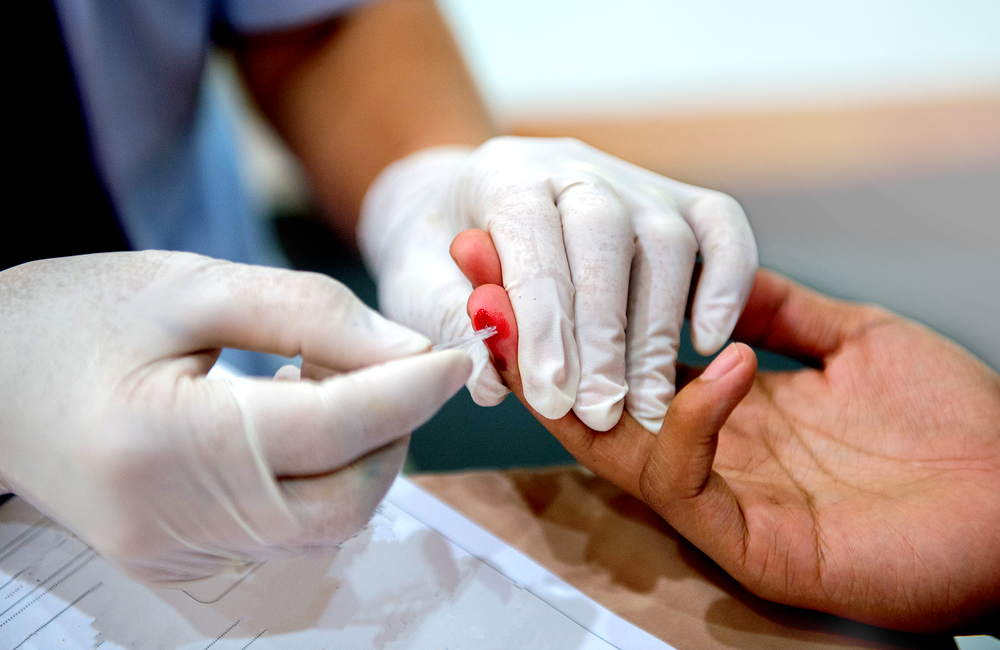
The meeting will also precede World AIDS Day activities, including a planned marathon across 11 cities that will combine HIV awareness with testing for HIV, tuberculosis and other health conditions.
Uganda's efforts are guided by the Presidential Fast-Track Initiative to End AIDS as a Public Health Threat by 2030, launched by President Yoweri Museveni in June 2017.
Etii called on the media and other stakeholders to participate in the symposium, saying stronger coordination, prevention efforts and sustainable financing remain critical to ending AIDS as a public health threat by 2030.
Health
November 04, 2026 · Uganda
YOUNG WOMEN DRIVE MAJORITY OF NEW HIV INFECTIONS AMONG UGANDA’S YOUTH
Raised concern over the disproportionate burden of new HIV infections among adolescent girls and young women.

UGANDA STARTS WITHDRAWING ITS UPDF TROOPS FROM SOMALIA AFTER 2 DECADES
29 views · 4 days, 3 hours ago
DIAMOND PLATINUMZ PROMISES UGANDA MASSIVE COLLABORATION
25 views · 3 days, 17 hours ago
KIFUMBIRO CHRISTIAN FELLOWSHIP CHURCH MARKS NATIONAL CLEANING DAY BY …
23 views · 3 days, 11 hours ago
TRAINS COLLIDE IN SPAIN, 68 DEAD
23 views · 5 days, 6 hours ago


 Nalubaale Rovincer
3 weeks, 6 days ago





Comments 0
No comments yet. Be the first to share your thoughts!